Photo by Alonso Reyes on Unsplash
Previously we looked at the methionine cycle, one of the functions of which is to generate methylation capacity Vitamin U (S-methylmethionine) information: The methionine cycle and Vitamin U Here we'll take a closer look at methylation.
Methylation describes over 100 reactions in our body ranging from the biosynthesis of creatine and phosphatidylcholine to the methylation of cytosine residues of DNA. The universal methylation substrate is S-adenosylmethionine (SAM or SAMe), which is a form of methionine in which the methyl group has been activated and thus made suitable for transfer to acceptor molecules. Methylation is the transfer of a methyl group from a donor molecule to an acceptor molecule. Methylation capacity is maintained by the methionine cycle, which was covered previously.
The most renowned function of methylation is gene regulation, a component of epigenetics. Genes are made up of four nucleotides referred to using their initial - A,T,C,G. Methylation of particular C (cytosine) residues reduces expression of a particular gene by interfering with the binding of transcription factors involved in making the mRNA that encodes a protein. For example, the cell broadly methylates toxic genes like retroviruses that have been incorporated into our genome to silence them. When your methylation state is low, retroviruses can reactivate. Conversely, the promoters of genes that must be on at all times are usually embedded in CpG regions that are resistant to methylation.
Quantitatively, the most important methylation reaction in our body is the biosynthesis of creatine. Creatine is an amino acid used in our muscles to regenerate ATP, the major energy molecule in our body. Creatine is made in the liver from guanidinoacetate in a reaction catalyzed by guanidinoacetate methyltransferase (GAMT). This one reaction alone consumes 40-75% of our methylation capacity. Creatine travels from the liver to the muscles where it is activated by phosphorylation to produce creatine phosphate. The high-energy phosphate bond in creatine phosphate is used to regenerate ATP from ADP. The reason so much methylation capacity goes into making creatine is not just because creatine is vital, but rather that 1-3% of creatine cyclizes to form creatinine, which cannot be phosphorylated and is excreted as waste.
Another major methylation reaction is involved in the biosynthesis of phosphatidylcholines. Although most phosphatidylcholines are made elsewhere, a significant portion is made by methylation of phosphatidylethanolamine. The enzyme phosphatidylethanolamine methyl transferase (PEMT) catalyses the transfer of three methyl groups from three SAM molecules in three consecutive steps to a single phosphatidylethanolamine molecule to produce a single molecule of phosphatidylcholine. Or said another way, phosphatidylcholine is trimethylated phosphatidylethanolamine.
Our methylation status can affect the ability to perform these functions. When the concentration of SAM is low, methylation slows down. The most common reason for a lack of methylation is insufficient methyl capacity from the diet. SAM is a reactive molecule that isn't stored in food or in our body. SAM supplements do exist, though they are relatively expensive, unstable and short-acting. The best way to meet our SAM requirements is by eating food containing nutrients that are used by our body to synthesize SAM. Our body makes SAM from methionine and ATP, with methionine supplying the methyl group. After SAM has donated its methyl group, we are left with S-adenosylhomocysteine, which in turn, is hydrolyzed to homocysteine. Homocysteine sits at an important metabolic fork. When our body is in a low methylation state, there is a tendency for homocysteine to be converted back into methionine by remethylation, even when the body may also be short of transsulfuration products such as glutathione. In contrast, when the methylation state in our body is normal, excess homocysteine is diverted into the transsulfuration pathway to form cysteine and its derivatives like glutathione and taurine.
Methionine is an essential amino acid found in protein. When methionine is remade from homocysteine, there are three nutrients that can supply the methyl group -
1) Folate/Serine
2) Choline/Betaine
3) Vitamin U
Remethylation is catalyzed by a specific enzyme for each nutrient -
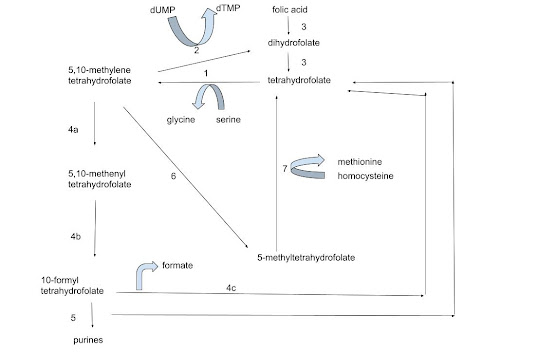
1) Methionine synthase (MS) uses the cofactor B12 to transfer a methyl group from 5-methyltetrahydrofolate (folate) to homocysteine to form methionine and tetrahydrofolate.
2) Betaine homocysteine methyltransferase 1 (BHMT1) uses the cofactor zinc to transfer a methyl group from betaine to homocysteine to form methionine and dimethylglycine.
3) Betaine homocysteine methyltransferase 2 (BHMT2) uses the cofactor zinc to transfer a methyl group from Vitamin U to homocysteine to form two molecules of methionine.
We get most of our folate from vegetables and whole grains. Folate comes in various forms which our body converts into the active form MTHF. In fact, the major source of folate for many Westerners is folic acid added to processed wheat flour to make up for the loss of folate during milling. While a certain amount of folate we eat is already methylated, the main role of folate is that of a carrier. The same folate molecule accepts and donates a methyl group many times during its existence. The methyl group is supplied several enzymatic steps upstream by serine.
Betaine is abundant in whole grains. It functions as an osmoprotectant to the plant, so is found in most grains with the notable exception of rice, most of which is grown underwater. The major source of betaine in the typical American diet is bread, especially whole grain. In addition, a substantial amount of betaine is derived from choline. Choline is found in most whole foods, especially eggs, meat and whole vegetables. It is mainly used in phosphatidylcholine synthesis. Extra choline is broken down to make betaine.
Betaine has three methyl units available that can feed into methylation pathways at various points. Betaine donates a methyl unit to homocysteine to produce methionine and dimethylglycine in a reaction catalyzed by betaine homocysteine methyltransferase. Dimethylglycine donates a methyl unit to tetrahydrofolate to produce sarcosine (methylglycine) and methylenetetrahydrofolate in a reaction catalyzed by dimethylglycine dehydrogenase. Sarcosine also donates a methyl unit to tetrahydrofolate to produce methylenetetrahydrofolate, this time in a reaction catalyzed by sarcosine dehydrogenase. The latter two reactions activate folate, which enables it to methylate homocysteine.
Vitamin U (S-methylmethionine) from plants has two methyl units to donate as its reaction with homocysteine not only converts homocysteine into methionine, but itself is transformed into a second molecule of methionine. The reaction is catalyzed by the enzyme BHMT2 and mostly happens in the liver and kidneys. The major dietary source of Vitamin U are fresh vegetables and fruit.
Does Vitamin U contribute to methylation status in people? Assuming a maximum of 250 mg Vitamin U is taken each day from the diet (from a generous one liter of cabbage juice), that's 1.25 mmoles of Vitamin U or 2.5 mmoles of methyl groups. In a typical diet, methionine contributes 10 mmoles, choline contributes 30 mmoles, betaine contributes 26-75 mmoles, and folate (via methylneogenesis) contributes 5-10 mmoles of methyl groups per day. Assuming these estimates are correct, Vitamin U plays quite a modest role in the methylation status of people. However, it should be taken into consideration that not all of these nutrients give up their methyl groups. Methionine incorporated into proteins and choline used to make phosphotidylcholine are examples.
For a vegan with a low protein diet and whose staple grain is rice, the contribution from Vitamin U is more significant as a percentage, though this diet may be low in total methylation capacity. It's not that Vitamin U is not a quality source of methyl groups - it's just that it's low in abundance in a natural diet compared to the other methyl donors. The fact that mammals have an enzyme devoted to its use demonstrates the importance Vitamin U has in the diet. To increase the contribution of Vitamin U towards methylation in people whose diet contain low concentrations of methyl groups, it is possible that larger amounts of Vitamin U via supplementation could be effective.
References
https://www.ncbi.nlm.nih.gov/pubmed/17209172
https://www.ncbi.nlm.nih.gov/pubmed/23196816
https://www.ncbi.nlm.nih.gov/pubmed/23661599
https://www.ncbi.nlm.nih.gov/pubmed/17413090
https://www.ncbi.nlm.nih.gov/pubmed/1128236
https://pubmed.ncbi.nlm.nih.gov/30871166/